

Imagine you’re in a war zone at night. Darkness is not just an absence of light: it’s a cloak of uncertainty, where every sound can send chills down your spine. Enter military drones, the unsung heroes illuminating the sky with technology and precision. They’re not just buzzing around like bees: they’re gathering intelligence, executing missions, and, let’s be honest, making nighttime operations as exciting as a high-stakes thriller. In this text, we’ll investigate into how military drones operate after dark, their advantages, the technology that powers them, and the challenges they face. Buckle up.
The Role of Military Drones in Modern Warfare
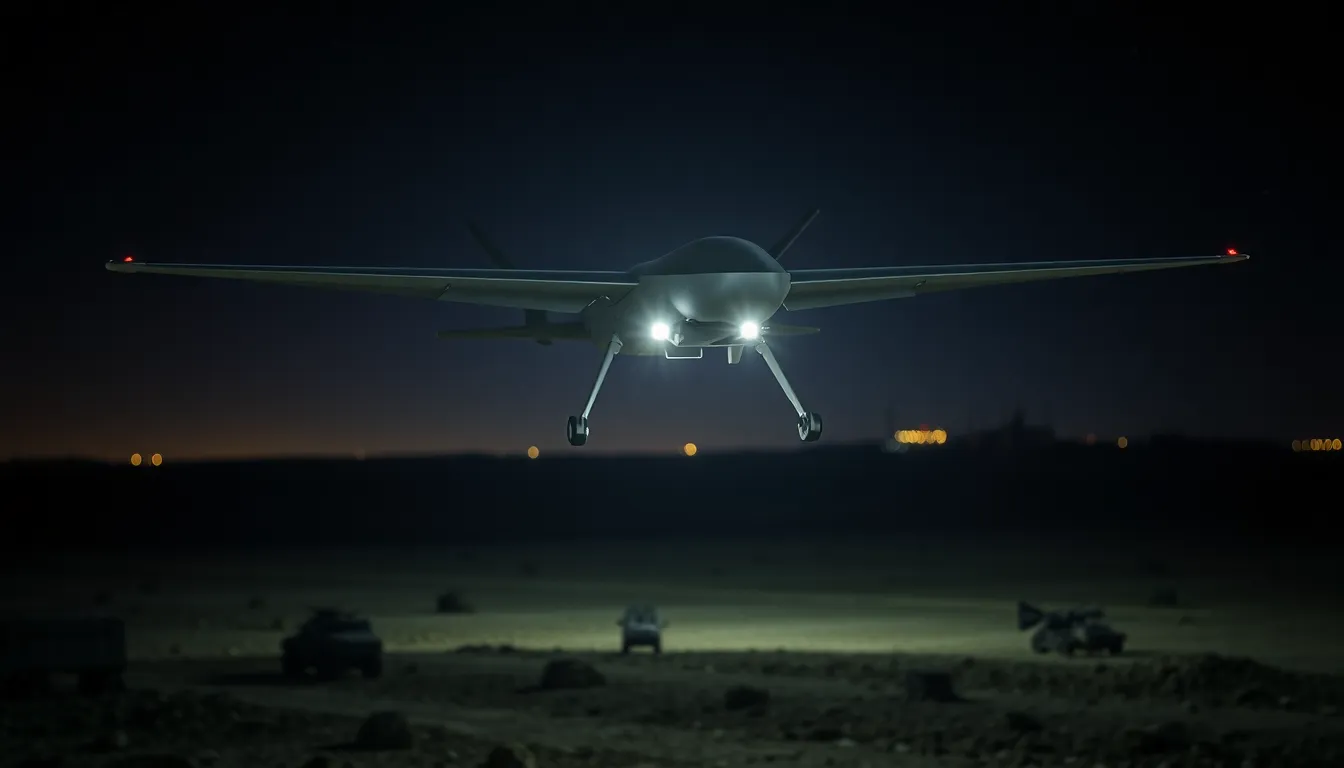
In today’s fast-paced world, military drones play an unparalleled role in modern warfare. They’re no longer the futuristic gadgets of sci-fi films: they are pivotal in gathering intelligence, executing precision strikes, and conducting surveillance. Drones offer a bird’s-eye view of the battlefield, assessing threats without putting lives at risk.
When deployed, these aerial vehicles can cover vast areas quickly. They gather vital intelligence that informs military strategies and decisions. Commanders can monitor movements and assess enemy positions in real-time, greatly impacting operational outcomes. So, military drones have become indispensable in modern armed forces, greatly enhancing combat effectiveness.
Advantages of Nighttime Operations
Nighttime operations wield several edge-of-your-seat advantages, particularly when it comes to military drones. First and foremost, the element of surprise is critical in warfare. Darkness creates an advantage, as unsuspecting targets become more vulnerable. Predators like the MQ-9 Reaper can conduct strikes or surveillance under the cover of night, ensuring that enemy forces can’t easily anticipate their movements.
Besides, the tactical utilization of drones at night reduces the risks associated with human operatives on the ground. Pilots control drones from a safe distance, which mitigates the concerns of nighttime patrols that human soldiers might encounter. This strategic safety allows forces to conduct operations with minimal risk to personnel while maximizing impact on enemy capabilities.
Technology Behind Nighttime Drone Missions
So, what does it take for military drones to rock the night sky? Cutting-edge technology. These drones are equipped with a range of advanced sensors and imaging capabilities, allowing them to navigate and perform tasks efficiently in low-light conditions. For instance, infrared cameras can detect heat sources, enabling operators to spot activities or movements even when the sun has dipped below the horizon.
Also, advanced image processing algorithms enhance the clarity and detail in the images captured. They not only provide essential visuals for ground operators but also help immediate analysis, which can be crucial in rapid-response situations. The integration of sophisticated GPS systems and automation features further ensures that drones can maneuver through challenging terrains, allowing them to operate where human eyes would struggle to see.
Challenges Faced by Military Drones at Night
Even superheroes have their kryptonite. Military drones face specific challenges when operating at night. One significant hurdle is the inherent limitations of sensor technology. Though innovative, nighttime sensors can produce images that vary in resolution compared to daylight operations. This could lead to misinterpretations of data, which can affect mission outcomes.
Also, adverse weather conditions pose challenges as well. Fog, rain, or snow can hinder drone operations, reducing visibility and affecting sensor functionality. Also, communication systems are vital for control and feedback. When flying over hostile territories, maintaining clear communication links becomes a game of cat and mouse, often complicating operations.
Case Studies of Nighttime Drone Usage
Let’s jump into some riveting real-world examples showcasing the prowess of military drones during nighttime operations. One notable instance occurred during the Second Gulf War, where drones were deployed extensively for surveillance missions under the cover of darkness. Their ability to relay real-time information to allied forces proved invaluable.
Another significant example is Operation Neptune Spear, the mission that led to the death of Osama bin Laden. Drones played a crucial role in intelligence gathering and reconnaissance, assisting ground troops in executing a meticulous and successful operation. These case studies highlight the versatility and strategic importance of military drones during nighttime operations.
Future Developments in Nighttime Drone Technology
Looking ahead, the future of nighttime drone technology is poised for incredible advancements. Emerging technologies like artificial intelligence (AI) are set to transform how drones assess and respond to threats. AI can enable drones to analyze vast amounts of data swiftly, offering operators insights that were previously unattainable.
Also, developments in stealth technology ensure that these drones can operate undetected, making them ever more effective in mission-critical scenarios. Enhanced autonomy will allow drones to execute missions with minimal human intervention, further revolutionizing aerial warfare. The future truly holds endless possibilities for military drones at night.

